
Pool Renovation: Process, Cost and Key Considerations
Pool renovation can become a process that repeats itself in a short time and grows more costly with each round if not done correctly. Whether it is a villa pool or a commercial facility pool, the success of the renovation depends on proper planning, quality materials and experienced workmanship. Drawing on the experience we have gained from pool renovation projects carried out across Silivri and Istanbul, we have compiled everything you need to know about this process.
When Is Pool Renovation Necessary?
If your pool shows one or more of the following signs, it is time for renovation:
- Cracks and peeling in the plaster or cladding
- Suspected water loss or leakage
- Yellowing or staining of the surface colour
- Reduced performance in filter and pump systems
- Wear or breakage in the flooring around the pool
The Pool Renovation Process
1. Site Visit and Damage Assessment
The first step in renovation is a comprehensive inspection of the pool's current condition. Water leak testing, surface inspection and plumbing checks are carried out at this stage. The scope and duration of the renovation are determined based on the extent of the damage.
2. Draining the Pool and Surface Preparation
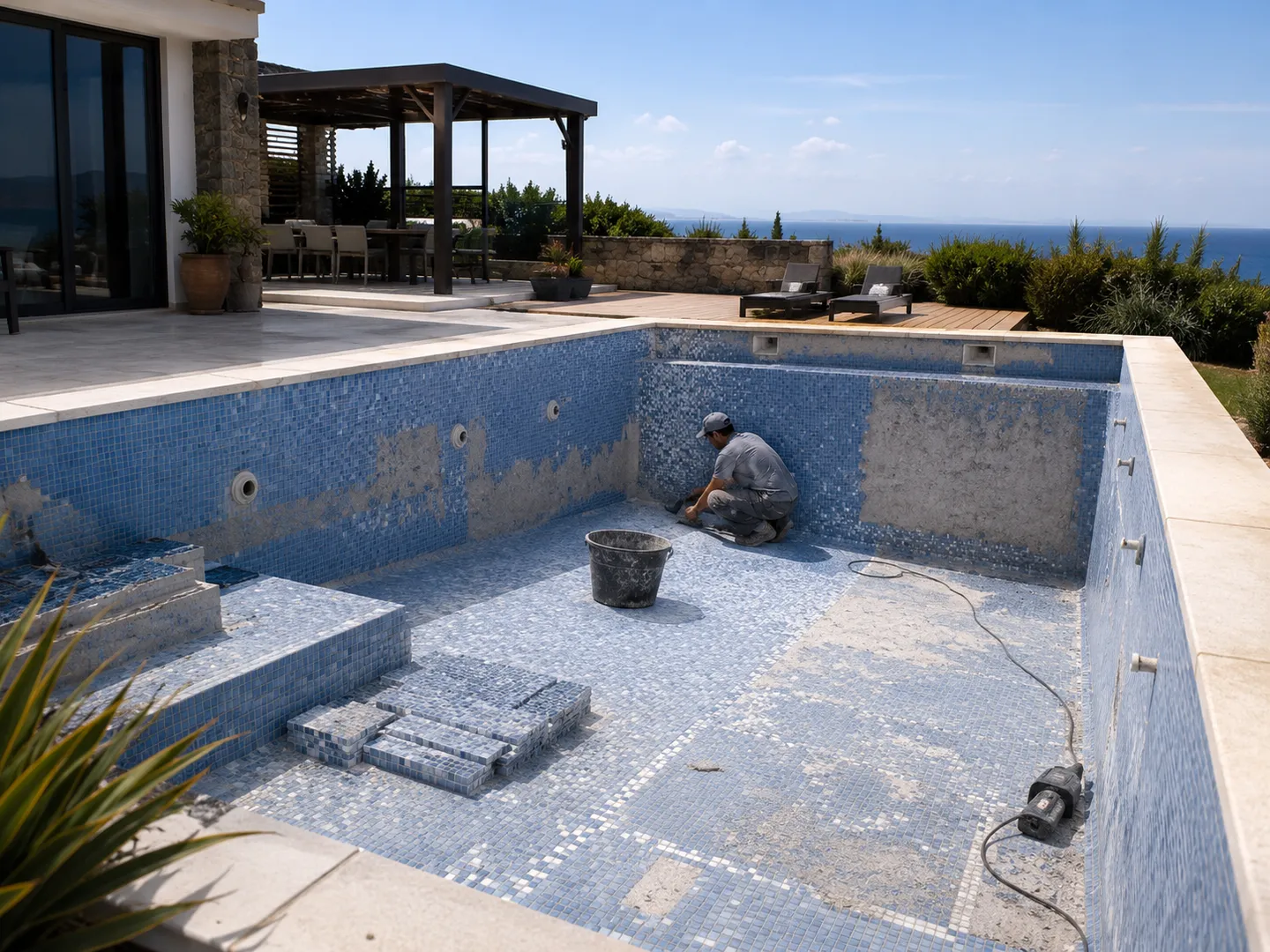
Before renovation begins, the pool is fully drained. The old plaster, cladding or paint is completely removed and the surface is cleaned. When this stage is skipped, the new application deteriorates quickly and the lifespan of the renovation is significantly reduced.
3. Structural Repair
Cracks and structural damage identified during surface preparation are repaired using specialist materials. This step is particularly critical for permanently resolving water leakage problems.
4. Waterproofing Application
This is one of the most important stages of pool renovation. High-performance waterproofing systems are applied to ensure the pool can be used without problems for many years. Cutting corners on waterproofing quickly results in water loss and the need for further renovation.
5. Cladding Application
After waterproofing, cladding is applied to the pool surface. The most common choices are:
- Mosaic and ceramic: Aesthetically rich, durable and long-lasting.
- Pool paint: An economical option, but requires more frequent renewal.
- Specialist pool plaster: Provides a smooth surface and high water resistance.
6. Inspection of Technical Systems
Once cladding is complete, the filter, pump, lighting and heating systems are inspected and renewed where necessary. When technical systems are neglected, the lifespan of the pool renovation is shortened.
7. Surrounding Area Arrangements
Flooring around the pool, stair steps and decorative elements should also be included in the renovation scope. Choosing non-slip and water-resistant flooring materials for the surrounding area is of great importance for safety.
Factors Affecting Pool Renovation Cost
The cost of pool renovation varies depending on the size of the pool, the extent of the damage, the chosen cladding material and technical system renewals. The key cost determinants can be summarised as follows:
- Pool size: As the surface area increases, so do material and labour costs.
- Extent of damage: Situations requiring structural repair directly affect the cost.
- Cladding preference: Mosaic and specialist plaster have a higher upfront cost compared to pool paint, but are more economical in the long run.
- Technical system renewal: Replacing pumps, filters or lighting creates additional costs.
Key Points to Keep in Mind
- Always use quality materials for waterproofing; cutting costs in this area leads to far higher expenses in the long run.
- Having renovation done during the winter months offers advantages in both price and scheduling.
- Always choose non-slip materials for the flooring around the pool.
- Plan for the water filling and chemical balancing stages after renovation as well.
- Work with companies that offer a workmanship guarantee; potential leakage problems in pool renovation should be resolved within the scope of the guarantee.
Conclusion
Pool renovation is an investment that, with proper planning and quality materials, ensures trouble-free use for many years. Addressing every stage carefully, from waterproofing and cladding selection to technical systems and surrounding area arrangements, directly determines the lifespan and quality of the renovation. AS Dekorasyon provides pool renovation services across Silivri and Istanbul. Contact us for a free site visit.